

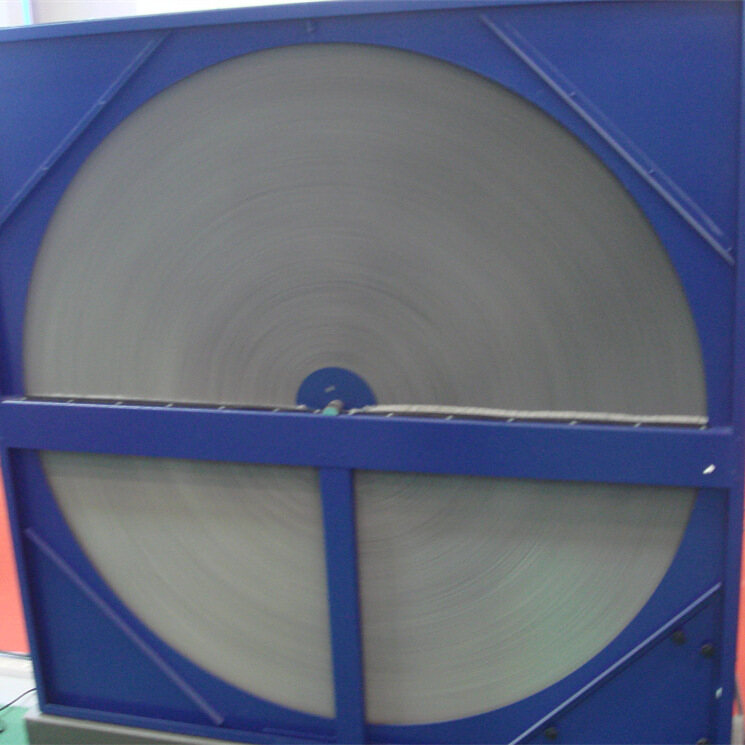
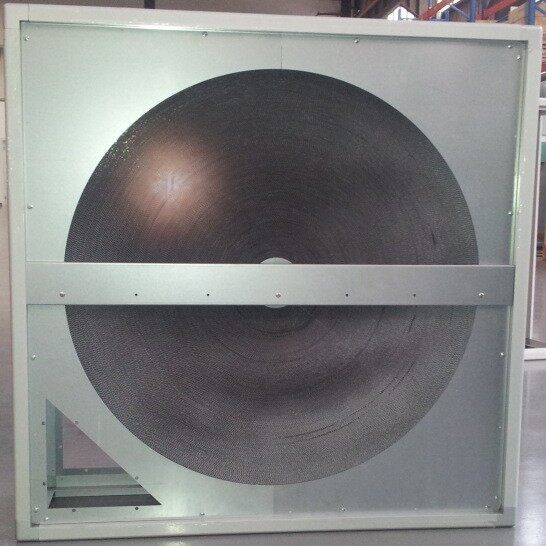
The material surface of the energy storage core component of the silica gel heat recovery rotor is coated with inorganic silica gel. By taking advantage of the nano-scale voids and pores within silica gel and its strong adsorption capacity, it achieves the adsorption of water molecules in the air. Silicone gel, also known as silicic acid glue or silicic acid gel, is a specially synthesized rubber material, whose main component is silicon dioxide. In an air flow with a humidity of 60%, the moisture contained in the gas can be absorbed up to 50% of its mass. It has stable chemical properties, is insoluble in water and non-toxic and harmless. It has good temperature adaptability and anti-aging properties, and can be used for a long time in natural environments. However, due to the lack of strict regulations on the size of the internal voids and pores, it has no screening ability for the adsorption of all molecular types contained in the air. It can not only accept water molecules with a diameter of<=3A, but also adsorb various gas molecules with a diameter greater than 3A (such as carbon dioxide, propane, isopropanol, xylene, odorous bacteria, viruses, ammonia and other pollutants). The probability of cross-contamination cannot be effectively prevented.
Роторът за възстановяване на топлината на силикагел, поради прилагането на специален процес със силикаторен гел покритие на повърхността на алуминиевото фолио, не само гарантира ефективното превръщане на температурната ефективност, но и прехвърля потенциалната си ефективност чрез адсорбиращи водни молекули чрез силика гел ., което е по-малко, за среди с висока дума} може да се регулира ефективно и да се регулира {{{{2 {2.} може да се регулира ефективно и да се регулира {{{2 {2 {2 {2 {2 {2 {2 {2 {2.}… Въпреки това, след дългосрочна употреба, неговите наноразмерни празнини и пори се пълнят с молекули с различни диаметри, а адсорбционният ефект постепенно ще намалее ., той трябва да се третира чрез процес на регенерация, за да бъде възстановен .


